Jax Armada to honor remaining player contracts, include option for players to leave – Soc Takes

As the NASL awaits the court’s decision, all the uncertainty has certainly affected players and front office personnel negatively. In a letter sent to the 10 remaining players on the Jacksonville Armada roster, team owner Robert Palmer has attempted to ameliorate some of their concerns by declaring that they will, at the very least, continue to get paid through 2018.

Soc Takes was provided with a copy of this letter:

A copy of the letter from owner Robert Palmer to the Jax Armada players still under contract.

Highlights include:

  1. The players will have their contracts honored through 2018.
  2. The players have the option to:
    1. Stay with the team and play in whichever league Armada plays in.
    2. Have the team help the players find a Division II club to be loaned to while continuing to be paid by The Armada. (Author’s note: I would be surprised if USL clubs are not already exploring this option.)
    3. Ask to be released from the club.
  3. The team plans to return to “a league that can facilitate a similar level and competitive quality to that of Division 2 in the future.”

While other teams have handled their personnel decisions poorly, it is to Armada’s credit that they have been cognizant of what is at stake here.

Follow Nipun on Twitter: @NipunChopra7.

Support Soc Takes on Patreon for access to patron-only Soc Takes Pod episodes, exclusive written content and tier rewards. Click here to become a patron today.

Related

Meet the Main Street Greens, lower-division soccer's 1st LGBTQ supporters' group – Soc Takes

Image credit: Holly Hutto/Main Street Greens

American soccer in the United States is a rapidly growing sport. In its current iteration, appropriate questions are being asked about the loudest voices – regarding both fans and journalists – in the rapidly changing narrative of American soccer. A quick perusal of prominent supporter groups and fan sites and it is clear that so far the narrative has been written by cisgender straight white males; particularly in the lower divisions of American soccer. For American soccer to continue to grow, that must change, and a diversity of voices and opinions must become a part of American soccer.

Beyond racial, ethnic and sociopolitical diversity, soccer must embrace individuals of different sexual orientations and gender identities. And moreso, as cisgender males we must give them a voice.

We present to you an interview with Holly Hutto, the spokesperson and one of the founders of US Soccer’s first LGBTQ supporters’ group for the lower divisions.

NC – Who are the Main Street Greens? Who do you support?

MSG – The Main Street Greens are an LGBTQ (and allies) supporters group of OKC Energy FC.

NC –  What was the idea behind starting an LGBTQ supporter’s group? What is the idea behind the name?

MSG – The idea behind starting this LGBTQ supporters group is pretty simple. It’s simply time. As OKC Energy FC enters its fifth season, it’s time to grow the fan base of this beautiful sport & wonderful club in Oklahoma City, & the state in general.

The name Main Street Greens derives from two things that soccer supporters love in OKC. Its soccer bar & the Energy. USL fans know that OKC is nicknamed ‘The Greens’, so that part doesn’t require an explanation.

But, Skinny Slim’s in Downtown OKC has been a sacred place for soccer supporters in OKC since it first opened. It’s honestly like our Cheers. Our commitment to the place is that serious. Energy FC supporters meet there regularly throughout the entire year, not just during the USL season. We meet there for EPL matches, holidays, beers on any average Tuesday, etc. We’re a diverse group of people, but there, we’re really all the same. It’s a meeting spot for chosen family & it’s a beautiful thing.

Skinny Slim’s OKC resides on Main Street. And there you have it, the name ‘Main Street Greens’ was created.

There’s also a noteworthy level of equality associated with the name. The term ‘Main Street’ is oftentimes associated with everyday, common people. Well, the LGBTQ community is everyday, common people & this group aims to shine the light on that fact.

NC – How many members do you have?

MSG – It’s hard to give an accurate, concrete number at this time.

My estimate is that we’ll enter the 2018 USL season with 20 members. If we enter the start of the season &/or finish the season with more than that, I’ll be thrilled. Hell, even if we enter Taft Stadium with five of us representing Energy FC as the Main Street Greens on Opening Day, this group will serve its purpose in my book. I want people to know that soccer is a sport for everyone. This supporters group is an example of it being so, regardless of its size.

This supporters group was launched in November 2017. I’m nothing but pleased with the the amount of interest the Main Street Greens have sparked in such a short amount of time.

NC – Do you have any affiliation with The Grid OKC?

MSG – At this time, no. We have members, including myself, who have served as officers for The Grid in past season; however, the Main Street Greens were founded as a separate supporters group for OKC Energy FC.

NC – Has the club been supportive of your SG? How so?

MSG – Absolutely! Billy Walton, Tyler Vaughn, and other members of the front office have been nothing but positive and supportive of the Main Street Greens so far. I expect that to continue! The love is real!

We’re excited to support our players & our new coaching staff in 2018! No doubt in my mind that they’ll support us as well. We’re talking about community-minded folks across the board here.

NC – What do you hope to achieve via Main street greens?

MSG – Simply put, I want to put a spotlight on the fact that we’re ALL in for OKC. I want LGBTQ folks, & other individuals who are feeling left out to know how inclusive this sport can be. I want these people to know that can join us as members of our family.

NC – Are you aware of any other LGBTQ SGs?

MSG – Yes! The Canal Street Blues, Gay Gooners, Pride of the Sound, All Stripes, just to name a few. Also, Brighton & Hove & the NWSL have a noteworthy history of LGBTQ support! To my knowledge, this is the first LGBTQ (& allies) supporters group in the USL, USA’s division two soccer.

NC – Have you experienced homophobia at soccer games?

MSG – I understand & support participation in banter, but there is no place for homophobic chants in the beautiful sport of soccer. I know that my soccer family in OKC doesn’t stand for it & that always makes me feel safe & welcome.

However, I’d be lying if I said that I’ve never heard homophobic, ‘puto’ chants at soccer matches, including from some supporters at Energy FC matches. These chants serve no purpose & hold no place in our supporter cultural. It’s past time to end them.

NC – How can fans support Main Street Greens?

MSG – Being a supporter and member of the Main Street Greens isn’t a “One Size Fits All” thing! Join us for a beer! Follow us on Twitter! Order some merch! (Hopefully we’ll have some available for preorder soon!) Cheer on Energy FC with us on the North End at Taft Stadium. And support the LGBTQ community wherever you go!

Follow Nipun on Twitter: @NipunChopra7.

Support Soc Takes on Patreon for access to exclusive content and supporter benefits. Click here to become a patron today.

Related

The feel-good story you missed: Rakitic visits Des Moines, Iowa – Soc Takes

Photo credit: Matt Homonoff

FC Barcelona’s Ivan Rakitic regularly plays at the Nou Camp; a magnificent and historic stadium that can hold just under 100,000 people. 7500 miles away sits Des Moines, Iowa with a population of 200,000. In other words, half the population of Des Moines could fit in the Nou Camp. So what exactly was Ivan Rakitic doing visiting Des Moines’ Menace Soccer Club, a PDL club in Iowa? The answer to this question is the most heart-warming U.S. Soccer story you almost certainly missed.

Soc Takes was also able to interview Rakitic via the help of Ignacio Lana.

Rakitic arrives at Valley Stadium. Photo credit: Matt Homonoff

Menace Soccer

Menace Soccer are a club of “extraordinary resources, a wealthy owner with a successful company. We still have amateur status, but are able to provide players with amenities such as furnished apartments,” Matt Homonoff, general manager of Menace Soccer tells Soc Takes. “Our owner, Kyle Krause (Note: Krause is the CEO of Kum and Go) has owned the Menace PDL team  for 20 years.” The men’s team was founded in the USISL and has played in the Heartland conference of the PDL since 1999.

The team focuses on developing talent and providing them with the chance to have a significant impact in the professional game. “We are looking for ways to use resources to benefit and grow the game,” adds Homonoff, “While we focus on developing players from the Midwest, we’ll fly you in from wherever if you are talented and you meet our vision.”

Elite Soccer Experiences

Rakitic poses with young FC Barcelona fans. Photo credit: Matt Homonoff

The intermediary influence of ‘Elite Soccer Experiences’ (ESE) was critical to bringing Rakitic to Des Moines. Homonoff informed us that initially Juan Mata, then Rafinha were supposed to come to Des Moines. The former proved to be too expensive, while the latter injured himself after the contract was negotiated.

ESE is an organization that started in 2015 and works with various athletes in football and basketball. According to Ignacio Lana, Country Manager of ESE, they have offices in Barcelona, Oviedo, Miami and Madrid. “In the US we do soccer camps and coaching clinics.” Lana and ESE have cultivated contacts with many European players such as the aforementioned 3, Eden Hazard and Andres Iniesta. These contacts have provided the “Soccer Abroad” section of ESE’s vision.

Why Des Moines?

Rakitic speaks to attendees of the camp. Photo credit: Matt Homonoff

Lana explains there were two big reasons. Firstly, Lana’s own person connection in Iowa to Thomas Boltnar. But, more so than that, Lana explains that players such as Rakitic want to visit cities like Des Moines because it gives them the ability to experience something unique and different from their normal, highly-scrutinized and fast-paced lives. 

“Rakitic told me that seeing kids faces when he was kicking around the ball with them was the highlight of his summer so far,” Lana says adding “At ESE we want to make children very happy. We loved being in Des Moines.”

“I watch a lot of games, and highlights, following how MLS is growing. I am happy to see that more soccer stars from Europe are joining the MLS every year. I like the league.” – Ivan Rakitic

Des Monies

If you’re cynical like me, I know what you’re thinking right now. “Come on you shill, Rakitic was only in Des Moines for the money.” Trust me, that was my initial thought as well. Turns out, that while there may have been other unspecified reasons for Rakitic’ visit beyond philanthropy, a heavy payday is not one of them.

Homonoff declined to provide an exact amount citing confidentiality issues, but said  “Was a five-figure amount”. According to Total SportTek , Rakitic earns 75k euros ($86k) a week. Therefore, even if we take Homonoff’s statement to its extreme end; 99k, Rakitic would earn that amount in just over a week.

When Soc Takes asked Lana about the 5-figure sum, he said “it’s about right” without specifying the amount due to contractual obligations and later adding, “Elite only works with players who are sensible towards kids and they want to give back what they received. We never work with players who are trying to do this for the money.”

It’s hard to argue that Rakitic was visiting Des Moines to expand his bank balance.

Rakitic’ experience in Des Moines

Matt Homonoff with a fan. Photo credit: Matt Homonoff

“He loved the experience of going out and not being mobbed, he rode ATVs. It was a whirlwind trip as he got in late Thursday night and left early Sunday morning. But, we made sure we built-in time that he could experience Iowa,” said Homonoff excitedly.

“Was wonderful for Ivan,” Lana said, “His family went to the farmer’s market. Together they went to the forest, enjoyed the landscape and the food and the weather was very good.”

According to Homonoff, Rakitic’s attitude and professionalism was a revelation for the kids and adults alike. “Rakitic was warm, genuine and put in an effort to speak English. He repeatedly asked us what else he could do for us,” later adding, “He takes cares of himself even in the off-season and spoke to the students about proper diet and training.”

——————————–x————————————-

An exclusive Soc Takes interview with Ivan Rakitic:

Soc Takes was able to get some answers from Ivan via email thanks to Ignacio Lana.

NC – Hi Ivan, what was your favorite part of your trip to Iowa?

According to Homonoff, Rakitic patiently posed for pictures and autographed jerseys/footballs for 100s of fans like these kids. Credit: Homonoff

IR – I don’t have a favorite part of the trip because everything was nice, sharing a fun time with the kids playing soccer, getting to know the city and watching the Menace game. A really great experience and I appreciate very much all the warm welcome and kindness from the people of Iowa. 

NC – How much American soccer do you get to watch in Spain?

IR – I watch a lot of games, and highlights, following how MLS is growing. I am happy to see that more soccer stars from Europe are joining the MLS every year. I like the league.

NC – Do you have a favorite American team?

IR – I don’t have a team yet, but I follow those with European famous players. I like to see the passion and effort at every game! I hope to come back next year to the US, this experience was unique and fun, congratulations to Elite Soccer Experience, they did a very good job.

—————————–x———————————–

The Rainbow

“It was raining during the first half of the game, but then we scored, and Rakitic 

The rainbow. Credit: Matt Homonoff

celebrated with us as though he was one of us. All of a sudden a rainbow (see pic) appeared in the distance.

“I looked around the stadium (note: Homonoff estimates 3500 people attended the game that night) and thought to myself, ‘Wow, this is incredible’, I felt proud to be from Des Moines and soccer was the vehicle for that.”

You can follow Nipun and Soc Takes on twitter at @NipunChopra7 and @SocTakes

Related

NASL retains IP unless buyout clause is paid – Soc Takes

Image credit: NASL

USL v NASL

Among the prevailing perceptions about the NASL and USL is that the latter has an ironclad franchise agreement that retains intellectual property, trademarks, and logos of any teams that depart the league. We previously outlined several key provisions of the standard USL franchise agreement.

On the other hand, it’s widely believed that clubs exiting the NASL are not subject to similar retention of intellectual property or other restrictions.

However, based on a copy of the NASL’s 2013 membership agreement provided by attorney Miki Turner, it appears the situation is more complicated.

Soc Takes examined the 2015 amendments to the NASL agreement, and found no differences in the specific subsections applicable to the information provided above. It is possible that further changes to the operational agreement have been made since 2015.

Exiting the league

First of all, a recap of the NASL’s exit fees. Much of this was reported by FiftyFive.One’s Wes Burdine last year.

According to the NASL’s agreement, a class A member of NASL, LLC can withdraw from the league in one of a several ways:

Proper Withdrawal – This would allow a team to play out the current season and exit the league on December 31 of that year. There are exit fees associated with this withdrawal depending on when the letter of withdrawal is received.

  • Before June 30th – $500,000
  • Between June 30th and the championship game – $1.5 million
  • Between the championship game and Dec 15th – $2 million
  • If at any time an owner signs over all its intellectual property and trademark, the withdrawal fee can be reduced to $250,000.

Practical conseq of NASL losing D2 is members can exercise clause to immediately withdraw from LLC w/ dramatically lower termination fee

— Neil Morris (@ByNeilMorris) November 4, 2017

Default withdrawal – The execution of this option would remove an owner and his team from the league effective immediately. The exit fee for this withdrawal is $2.5 million.

Operational withdrawal – If the league loses Division II status or there are less than 7 teams, the remaining teams can exit for $25,000.

Death of the principal owner – No withdrawal fee.

Image credit: USL

Buy me out

But, here is where it gets interesting. As reported by Kartik Krishnaiyer in an article for Soc Takes, the USL franchise agreement prevents teams exiting the USL from competing in rival leagues for two years and restricts their use of trademarks outside of USL during that time. As it turns out, similar clauses have long existed in the NASL agreement.

Per the NASL’s 2013 membership document, for two years after withdrawal (described above), a class A member cannot:

  1. Own another professional team in North America;
  2. Operate a team in a different professional league; or
  3. Use their trademarks and intellectual property in a non-NASL professional league.

If an owner wished to switch their team from the NASL to another league with its marks and IP, there are “buyout” clauses to accomplish that. These are penalties in addition to the exit fees described above. These fees depend on the divisional status of the league the team would join.

More specifically, if a team were to leave the NASL to join MLS, the buyout fee would be 10 percent of the MLS expansion fee, subject to a minimum of two million dollars and a maximum of five million dollars. If the NASL team left to join another Division II professional league, the penalty would be 1.5 million dollars. Finally, if the league of destination were a non-Division II professional league, the penalty would be 1 million dollars.

One caveat: any NASL member departing the league via an operational withdrawal is not subject to an additional buyout fee in order to immediately join another professional league and port their intellectual property.

The takeaway

These non-compete and buyout clauses raise interesting questions. In effect, a team exiting the NASL for another league is liable to pay an exit fee of $500k-$2M plus a buyout fee of $1M – $5M. So, did Minnesota United, Ottawa Fury, Tampa Bay Rowdies and North Carolina FC pay these exorbitant fees to exit the league? Soc Takes contacted the NASL for comment on the story but was not given any response at the time of publishing.

The non-compete clause also further highlights some similarities between the USL and NASL’s operational plans. The USL franchise agreement includes an “upward movement fee” imposed on teams leaving the USL for MLS, equal to 7 percent of the MLS expansion fee, with no minimum or maximum. However, the USL franchise fee does not contain an exit clause or fee accompanying a move to a different professional league outside of MLS.

Multiple sources – members of both NASL and USL – inform SocTakes that clauses within the operational agreements are open to negotiations between the franchisee (owner) and the franchisor (league). Yet, if this were true, could exit fees also be open to negotiation?

And if exit fees are negotiable, it is remarkable that NASL made it to 2017.

Neil Morris and Kartik Krishnaiyer contributed significantly to this article. Thanks to Ben Bromley and Keyser Todd for providing information for this article.

Follow Nipun on Twitter: @NipunChopra7.

Support Soc Takes on Patreon for access to patron-only Soc Takes Pod episodes, exclusive written content and tier rewards. Click here to become a patron today.

Related

Unclear Atlanta situation shows clarity in NASL's new vetting process – Soc Takes

Countdowns are dangerous. Ask Cinderella. Credit: Disney

Background

As the fable goes, when the clock struck midnight, shit hit the fan. Cinderella lost a shoe, almost lost the love of her life and something about a pumpkin.

Moral of that story was: don’t count down to anything.

Per the original website, Atlanta was scheduled to make a big announcement about bringing professional soccer to Atlanta on April 4. In our interview with CEO Trey Brantley, he told us:

“We are working on an announcement of something, although we’re going to have to readjust our time clock by a week, strictly because we want our local kids involved in the announcement. And it was missed that the time we selected was Spring Break.”

So, we were expecting a delay in the announcement. But, the clock struck midnight.

On Neil Morris’ podcast, NASL’s interim commissioner Rishi Sehgal stated that while they had indeed been speaking with the Atlanta group, the Atlanta bid wasn’t one of the advanced ones. Soon, the countdown on the website disappeared, and everyone was left wondering about the future of Atlanta’s bid.

Brantley’s team sent out a press release this evening via email:

“For a number of reasons, we have decided to reschedule the announcement we had scheduled for later this week.  The landscape of American soccer has changed dramatically over the past few months, and  rather than conform to an arbitrary timeline of our own making, we are going to take a little more time to evaluate the proposals in front of us.  We appreciate your patience as we make the best decision we can for the future of the game in our community.”

Soc Takes spoke to Brantley and he added, “From my perspective, the larger story hasn’t changed. We will be playing professional soccer next year.”

Improved vetting

CEO Trey Brantley. Credit: Atlanta 2018’s website.

Given the importance of rapidly finding four new expansion teams, Sehgal’s announcement that Atlanta wasn’t one of the advanced bids left us wondering why. While Brantley declined to comment on this, Soc Takes was told by a source that the league is wary of competing with the instant success of Atlanta United.

If true, it would be a piece of evidence supporting the league’s claim of being selective of their future expansion teams.

Currently, the general perception of the NASL is one of desperation. A league that needs to get to twelve teams to survive 2018. Yet, their hesitation of allowing the Strikers back into the fold, carefully waiting on finding a new owner for Jacksonville and the Atlanta story may be signs that the NASL is in control of its destiny. As SF Deltas CEO Brian Helmick revealed to Soc Takes, there is a new vetting committee and it seems to have taken control of the vetting process.

Soc Takes reached out to Helmick for a comment on the Atlanta bid. Helmick told us:

“Other groups are ahead in terms of the application vetting process. Any application where there already is another pro team in the market requires a higher level of scrutiny to ensure the market can justify a second club.”

SF Deltas CEO Brian Helmick commented on the Atlanta situation

That statement should be music to the ears of those who have wanted the NASL to step away from the abrasive, competitive and idealistic NASL model of yesteryear.

Of course, it doesn’t mean the Atlanta bid is dead. Certainly, us at Soc Takes believe that the bid has its merits. Just that 1. NASL isn’t pretending they can compete with MLS. 2. NASL likely has other stronger expansion bids ready to deploy.

Other options for Atlanta

What about USL? A source associated with the Atlanta bid told Soc Takes that discussions have taken place to buy and relocate an unnamed, defunct USL franchise to Atlanta. However, Soc Takes understands that USL is currently not interested in Atlanta as a potential market.

Atlanta could wait a year, and  join the NASL in 2019. Alternatively, Atlanta could indeed be announced as a 2018 NASL team; just much later than anticipated. Another option would be Atlanta looking to NPSL or PDL. At this point, things are unclear.

An update (sort of) on NWSL

As for the NWSL team, Brantley told Soc Takes:

“Conversations with NWSL are also ongoing. But, those are contingent on us having a stadium ready by 2019. So, we’re taking it step by step.”

Conclusion

While the future of Atlanta-NASL remains unclear, it is becoming increasingly apparent that the NASL truly is changing its vetting process. Unfortunately for Atlanta 2018, seemingly the countdown clock for NASL’s improved vetting hit midnight at the wrong time.

Chris Jericho thrives on countdowns. Pic Credit: Fan Sided

(This author would like to clarify that Chris Jericho appearing at Royal Rumble last year was an exception to the general rule of “don’t use countdown clocks.”

But then the rules don’t apply to Y2J.)

You can follow Nipun and Soc Takes on Twitter @NipunChopra7 and @SocTakes.

Related

A comparison between NISA and USL D3 – Soc Takes

Image credit: NISA

In March, Brian Straus of Sports Illustrated revealed that 2019 would see the formation of a new league — a yet-to-be-named USL Division 3 league. USL has been very transparent with its expansion process so far. Visits to Lexington, Des Moines, Lansing, Fort Wayne, etc., have occurred in the public domain.

Meanwhile, as Soc Takes and Midfield Press’ Chris Kivlehan have revealed, a D3 league aligned with the other side of the soccer pyramid is poised to begin in 2018. While it is rumored that clubs joining NISA will include mostly NPSL clubs, the exact identity of these teams remains a mystery. It remains unknown how many NISA-committed NPSL clubs currently qualify for the USSF D3 requirement of having a principal owner with a net worth of $10 million.

Identities aside, it’s interesting to compare the initial expectations of both leagues. While the financial and structural expectations of each league are similar, there are certain unique features differentiating each league.

All the data included in this article about USL D3 relies on information given to Soc Takes by a source about an internal webinar for potential USL D3 owners. A request to USL D3 personnel for an interview was not answered at the time of publishing. All the data obtained in this article about NISA has been provided by Peter Wilt, member of Club 9 sports and the public face of NISA.

Money

As things stand, USL D3 aims to run from March to October and plans on starting with 8-12 teams. In this regard, NISA appears to be very similar. Looking ahead, USL D3 expects to expand to 16-20 teams by 2021, while NISA plans to be at 24 teams by that time.

USL D3 expects team expenses to be between $1.2-$1.9 million annually; this includes salaries (staff and players) of $750K-$1.2 million annually. The annual USL D3 fee is $75K, while the initial expansion fee is $500K. As a comparison, Wilt revealed that the he expects team budgets to be between $1.5-$3 million annually, and a “low to mid six figures per team league startup fee.”

USL D3 (in $) NISA (in $)
Total cost 1.2M-1.9M 1.5M-3M
Salaries 750K-1.2M Unknown
Initial expansion fee 500K “Low to mid six figures”
Annual league fee 75K Unknown
Performance Security 250K Higher

There is also a performance security fee of $250K for USL D3 — a USSF-identified minimum. The NISA performance bond “will be higher than the U.S. Soccer minimum” according to Wilt.

Stadium and travel

USL D3 requires incoming teams to have a stadium (or plan for a stadium) with a capacity of at least 3,500 (higher than the USSF D3 requirement for D3 stadiums: a capacity of 1,000 and natural grass or turf).

In terms of NISA, Wilt clarified: “NISA expects teams to play in stadia with a minimum of 3,000 seats and have no other sports lines exposed. Grass fields with 120 yards x 70 yards are preferred, but exceptions on size and surface will be made while clubs look for a better venue in the future.”

Both leagues do not require stadia to be soccer-specific. Both leagues expect to limit travel to minimize costs. Although Wilt has previously admitted that that will likely not be possible in the first year.

Image credit: USL D3

Miscellaneous

The obvious difference between the two leagues is antecedent on differences between the NASL and USL models themselves. While NISA would allow teams to “control their brand including names, logos and marks” per information provided by Wilt, USL D3 is expected to follow the PDL model where the league will control the rights to the name of the franchise for two years after termination of the franchiser (USL)-franchisee (team) agreement. The exception to this rule is if the PDL as a whole collapses (falling below six members, or a few other possibilities), in which case the PDL franchise would be able to move freely to another league.

Additionally, while NISA has been very open about its desire to institute promotion-relegation, the status of USL D3 on pro-rel is somewhat unclear at this point.

A remarkable and impressive revelation of NISA is regarding fan ownership. According to the same Wilt-provided documentation cited earlier, “NISA is advocating for and actively supporting its teams to offer minority shares to the public.” It is unknown if USL D3 will offer this option.

Conjecture and conclusions

USL D3’s desire to expand into newer markets such as Lexington, Greenville, etc., is impressive. Lexington, in particular, is interesting. Once the home to the Lexington Bluegrass Bandits in the USISL (disclosure: author’s “surrogate family” was once involved in operating the Bandits), the city has a rich history of high school and college soccer. The possibility of professional soccer returning to Lexington has been met by excitement locally. NISA, possibly due to the 2018 launch, will draw mostly — maybe entirely — from already existing NPSL markets, and as such is having a smaller impact than introducing new markets.

While the general cost of both leagues appears to be the same, USL D3’s costs appear lower, particularly in terms of expected annual budget and the security bond. This is most obvious at the higher end of expected costs: $1.9 million for USL D3 vs. $3 million for NISA. The reasons for this are unclear; perhaps the USL, having been a D3 league until last year, simply has a better handle on how the budget would work. Perhaps Wilt, cognizant of issues seen with NASL clubs, would rather over-budget and over-prepare his teams than risk them collapsing.

It would be reasonable to suggest that USL D3, given their longer incubation time, will have stronger, better-vetted markets. But the fact that NISA is beating USL D3 to the starting line may yet be significant and pivotal in the ultimate stability of the league. Did NISA do their due diligence? Did they beat USL D3 to key markets?

The answers to those sorts of questions will become clear in about 12 months.

***

You can follow Nipun on Twitter: @NipunChopra7.

Soc Takes is on Patreon. Get access to patron-only Soc Takes Pod episodes, exclusive written content and tier rewards. Click here to become a patron today.

Related

Assessment of USL Referees – Soc Takes

Photo credit: Robbie Mehling/Soc Takes

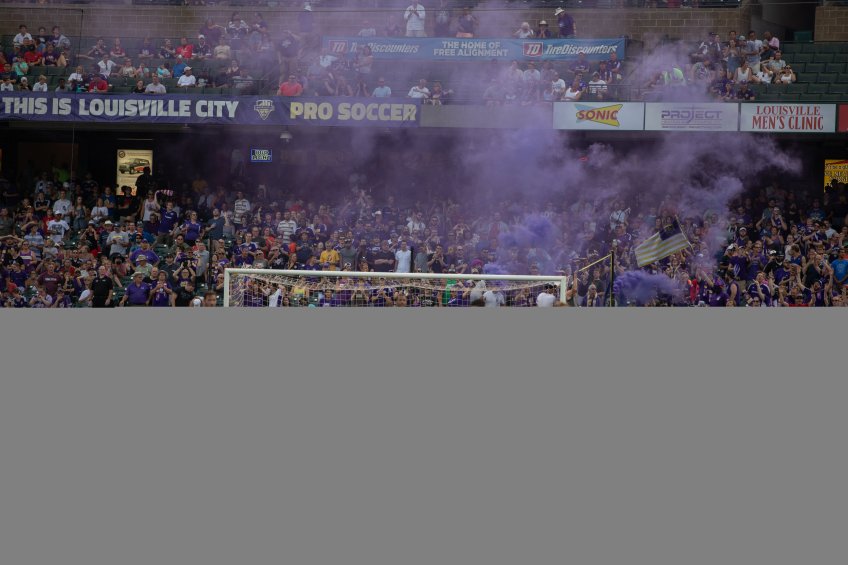
“That boy has been striking the ball very well,” Brian Darling says about George Davis IV during Louisville City’s draw against Indy XI in August 2018. Darling has been around the game for a long time – he earned his first USSF license back in 1979. Along the way, he has refereed games in various leagues including Major League Soccer (MLS), the United Soccer League (USL) and Premier Development League (PDL). These days, he serves in a different capacity. A role that many of us didn’t know even exists.

I first met Darling at a Louisville City match during LCFC’s playoffs in 2017. Slugger Field’s media room is largely (and understandably) reserved for LCFC staff and audio commentary. There’s a small room where local journalists, beat writers and nobody bloggers like myself congregate to watch the match. During one of LCFC’s playoff games, I saw this older gentleman taking notes on a white sheet of paper placed on a soccer clipboard.

Darling is a striking older gentleman. The most obvious thing you’d notice about the septuagenarian is his perfectly twirled mustache. If you stuck a three-piece suit and a hat on Darling, he would look like Peter Ustinov’s Hercule Poirot.

While the rest of us were reacting to LCFC’s fantastic ball movement in their expansive James O’Connor-inspired 3-4-3, Darling seemed to only react to stoppages in play, where he would jot down a few words. I introduced myself and learned that he was a referee assessor. “That’s a thing?” I asked.

“Well, of course!” Darling responded with a pause. He might as well have added “you dumbass” at the end of that sentence, because, I should know that that’s a thing. We should ALL know that that’s a thing.

Except, we don’t.

In researching this article, I was sent forms and documents galore that irrefutably negate a common misconception — the idea that USL referees have no incentive or repercussions for good or bad performances, respectively. The truth is, there are a multitude of metrics to ensure referee performance.

But before we get to those, let’s look over some basics about how refereeing is set up in U.S. Soccer.

The setup

Referees in American soccer all exist within a hierarchical structure. This structure ascribes a grade (1-8) to each referee based on experience and ability. Grade 8 referees are usually working youth and recreational soccer games, while Grade 7 referees having succeeded at the Grade 8 level are recognized by U.S. Soccer and selected by a Local Area Coordinator (LAC). Grade 7 referees oversee adult amateur soccer (think NPSL and PDL). After some time (usually at least a year) spent at Grade 7, referees move up to Grade 6 where one can referee at a state-wide level. Grade 6 and Grade 5 referees make up the bulk of referees at the USL level. Beyond Grade 5 is a whole set of interesting factoids — vis-a-vis the incredible achievements of these young men and women to reach MLS, FIFA and national team games.

There is also a well-known dearth of referees in the U.S. game. For example, there are believed to be only 120 referees at the Grade 4 (national) level.

However, for our purposes in this article, we will focus on Grade 5 and 6, as it pertains to the USL.

So, what are the requirements to be a referee at this level? Well, each state has its own tweaks to requirements, but Missouri’s Grade 6 referee requirements are pretty standard for various states. What we generally learn are that referees have to meet physical, experience-related and knowledge-related requirements that are subject to annual re-visitation. These referees attend clinics, conferences and performance reviews to stay at the top of their game.

Grading

So, let’s take a scenario. Tarouane Tellaini is a hypothetical USL player (arguably the greatest player of his generation) who slide tackles a player in the box. The crowd thinks it’s a penalty, the referee says no, and play continues. Replays show that Tellaini (in spite of undoubtedly being the greatest player of his generation) mistimed his tackle (after all, time is relative when you are a God) and the correct decision should have been a penalty.

What happens next? Does that referee get away with his poor decision?

Not quite.

You see, someone like Brian Darling is sitting somewhere, judging and marking down each important decision made by the refereeing team.

“The goal is to find three things they did well and three things they did poorly,” Darling tells me, running his hands across his mustache. “All refs at this level and higher are trying to improve.”

Darling writes down each key moment and after the match is over, he discusses those key moments with the entire refereeing team. He also shares his report with the USSF and each state referee association, and sometimes PRO (Professional Referee Organization). PRO and the other referee organizations can save those reports and key moments (in video format) in a huge database that is accessible to other referees.

But, what exactly is the assessment? Do these referees have repercussions for poor performances?

At the start of each game, each referee begins with an automatic score of 81. From this point on, points are subtracted for every incorrect decision. Decisions that are minor, such as misidentified corner kicks, result in a minor point deductions. Major decisions (identified as Critical Match Influence, or CMI) result in larger point deductions. These CMI include red cards and goals, and are pivotal to determining whether someone like Darling gives referees a passing grade for that game (a minimum score of 69 points). Additionally, these assessments are permanently attached to all referees; therefore, poor performances are not judged in an insular manner.

As Referee B — referenced below — tells us, “If I’m an AR and I miss an offside that leads to a goal, I would certainly not pass that assessment.”

If referees don’t pass their assessments, they are often reviewed by independent assessors, work-shopped with, and if they are repeat offenders, relegated to refereeing at a lower level. As Darling puts it, “They (referees who fail assessments) may not receive the same level of assignments and they may have to prove themselves to get these type of assignments again.”

So much for no repercussions.

The referee experience

Contrary to popular belief, referees are human beings. Humans that are doing their jobs. Humans that have families. Humans that hear you when you insult their families. Humans who continue to try to do their jobs in spite of what you say about their families.

Referees at the USL level get paid between $200-$500 per game, depending on their location and specialization (center referees get paid more than ARs). Therefore, all referees at the USL level have daytime jobs and referee part-time.

Soc Takes spoke to Referees A, B and C (names redacted to protect their identities):

Ref A – in USL, assistant referee in the Western Conference
Ref B – in USL, assistant referee in the Eastern Conference
Ref C – in USL, center referee in the Eastern Conference

All three referees spoke glowingly of the USL in terms of the growth in popularity and playing standards they have observed over the last few years. All three love the game and played at the high school and/or college level. When it comes to the torrents of abuse referees receive during and after every game, they are diplomatic, self-deprecating and understanding.

“I get it,” Ref C tells me via a Skype call. “They’re not there to see me. In their mind, my decisions can get in the way of what they’re paying to see. We’re used to the booing and the name-calling.”

Ref A is similarly unperturbed by abuse from fans. “Verbal abuse from fans doesn’t bother me,” but he also adds a disturbing addendum, “A referee I work with and train with was at a game where refs were physically assaulted.” 

When I ask him for details. He hesitates. Worried that even bringing attention to the particular game will result in torrents of abuse from one set of fans.

He’s worried about people like you and me.

What about the managers? When I ask all three referees if they believe coaches should be fined in response to post-match criticism from referees, all three agree that managers should be allowed to criticize referee performance. However, as Ref A puts it, “There’s a line where some managers make it personal and say certain refs don’t belong in the league. That’s not OK.”

Yet referees continue to receive abuse every single game. Every game, they leave the stadium having annoyed at least one set of fans. Every game, their performance is scrutinized by fans, players, coaches, referee assessors and even front office staff.

And what is disturbing is that fans believe referees are untrained, uninterested and unrepentant.

As Ref B tells us, “I have to provide self-assessment based on watching every single game after the game. This is in addition to my normal life and job. This process takes 6-10 hours of preparation/evaluation for that 90-minute match. The biggest misconception I see is that fans think we just show up, ref and leave. And they’re completely wrong.”

Photo credit: Robbie Mehling/Soc Takes

After the game, Brian Darling walks out of the elevator with a box of local pizza in one hand and his referee assessment in the other. He tells me earlier that he usually grabs pizza for the refereeing crew and discusses his assessment with them over pizza.

As he walks towards the room where the referees are, a high-ranking member of Louisville City’s front office staff yells, “Please tell me you saw what happened, they (the referees) cost us two points.”

Darling makes eye contact with the front office member, but, says nothing. He’s unperturbed by the absurd (and inaccurate) assertion. 

As his doppelganger Poirot once said in Death of The Nile, “It is not the past that matters, but the future.”

Multiple attempts to contact PRO for comment on this article were unsuccessful.

Update – In response to this article, PRO reached out to Soc Takes. 

Follow Nipun on Twitter: NipunChopra7.

Support Soc Takes on Patreon for access to exclusive content and supporter benefits. Click here to become a patron today.

Related

SF Deltas and FC Edmonton did not sign letters of commitment for NASL 2018 – Soc Takes

Image credit: NASL

As Soc Takes revealed on Twitter yesterday, per the NASL’s USSF application for D2 status (in August), the San Francisco Deltas and FC Edmonton did not sign letters of commitment for the 2018 season.

Soc Takes understands that FC Edmonton informed the league that they plan on joining the Canadian Premier League, which is poised to begin operations in 2018; after the commencement of the FIFA World Cup.

Meanwhile, multiple sources have confirmed to Soc Takes that SF Deltas owners informed the league that they would be unable to financially support a team without external investors next year. Soc Takes has also been told that the league has approached potential local investors about investing in the Deltas next year, including Nick Swinmurn (founder of Zappos and owner of the now-defunct Burlingame Dragons team). To our best knowledge, none of these communications have been successful so far.

As Soc Takes revealed earlier, neither of these teams voted in the process to bring litigation against the USSF.

Soc Takes understands the NASL informed the USSF of their intention to meet all requirements (minimum of 12 teams as well as time zones) by 2019.

Letters

The following teams signed letters of commitment for 2018 in August:

San Diego-NASL, Puerto Rico FC, New York Cosmos, Miami FC, Jacksonville Armada, Indy Eleven, California United FC, North Carolina FC.

It should be noted that after the catastrophic events of Hurricane Maria the future of Puerto Rico FC is unclear. Similarly, given the negative result of NASL’s D2 application, rumors abound that North Carolina FC is poised to make a switch to USL.

Switching homes

SocTakes was informed that the NASL plans on switching league offices to Miami by March 2018. Until the Miami office is set up, the New York office will continue to be in operation.

Follow Nipun on Twitter: @NipunChopra7.

Support Soc Takes on Patreon for access to patron-only Soc Takes Pod episodes, exclusive written content and tier rewards. Click here to become a patron today.

Related

USL expansion fee increases – Soc Takes

Credit: Robbie Mehling/Soc Takes.

Per information provided to Soc Takes, the initial franchise expansion fee for USL is now $7 million. This is an increase from their 2017 fee which was $5 million.

This fee increase would apply to teams signing franchise agreements in 2018 and beyond, and would not affect recently announced franchises.

An USL representative did not confirm or deny the report.

More to follow…

Follow Nipun on Twitter: @NipunChopra7

Support Soc Takes on Patreon for access to patron-only Soc Takes Pod episodes, exclusive written content and tier rewards. Click here to become a patron today.

Related

Tom Payne optimistic and critical toward NASL and own club, Puerto Rico FC – Soc Takes

Photo credit: John-Joe Pereira/Puerto Rico FC

Puerto Rico FC has had a difficult year. Off-field issues have combined with poor performances on-field. Before the kickoff of Puerto Rico’s first fall season game against North Carolina FC, Soc Takes caught up with PRFC president Tom Payne to discuss the health of the NASL, the search for a head coach and the future of the club. As usual, Payne was forthright.

Nipun Chopra – What are your general thoughts on expansion and status of the league right now?

Tom Payne – Obviously we’ve added two teams, both in Southern California, which certainly opens the league up to having an extended number of teams in the west. That’s great, but it does complicate things in terms of travel for the rest of us, but it is good to have teams in those markets. I’m familiar with the stadium at Fullerton — a good location for soccer. I don’t know the people involved very well, although I met the people involved — GM Michael Collins for example — he comes out of youth soccer mostly and seems honest about the learning curve he will be on.

PRFC president Tom Payne. Photo credit: PRFC

So those things are all good. But as with anyone else, I wonder what about the other markets we keep hearing about? But also some of the other teams in the league right now. We know there’s a Canadian league about to start, does that affect Edmonton? We know North Carolina just hosted MLS, does that have any effect?

I’m remaining positive and assuming these teams will all stay in the league. We’ll add those two west coast teams and 1-2 more. I’m not sure if those two will begin in the spring or not, but overall, signs seem to be positive. The markets we are moving into are good markets. But we also have to ensure that good management is in place in those good markets. We have to ensure that every team is acting as responsibly as possible. Right now every team seems to be doing that, but can they do that if revenue isn’t matching up long-term?

NC – Are you at liberty to discuss the identity of those two teams you mentioned?

TP – No, but I think the information is already out there. 

NC – We heard a lot about transparency in March/April. Was that something that has been followed through among the owners, or was that short-lived?

TP – We certainly send in match reports with numbers. We shared sponsor revenue earlier on as well. And I think at the board level there is transparency too. I see that as a real positive because there are owners that need to understand the true reality of the entirety of the league. Sometimes owners need to see that teams aren’t making money; because that’s realistic. New owners come into the league – and this is true of our leagues and others – and think that they’ll make money within a year or two. That’s just not realistic for most businesses and certainly not for sports businesses.

In MLS, I can think of 4-5 teams that are making money. But we even shared real details of how much a team was paying its staff members and coaches. For example, I reached out to the league to ask if they could give me the range of salaries for head coaches in the league. They got right back to me with an honest number.

Previous head coach Adrian Whitbread was fired in June. Credit: NASL

NC – Speaking of head coaches, what’s the update on the search for a head coach for PRFC? 

TP – It’s been difficult. I think we are going to continue to bide our time a little bit and then decide whether we turn our interim coach to a long-term proposition or whether we want to bring in another full-time coach. I made it clear to ownership that whichever way it goes, it needs to be decided by October because that’s when you’re making decisions about your current players, whether you’re retaining them. Look, we have one win this season, and I stood in front of the whole team recently and told them: ‘Guys we have one win and there’s not many teams interested in many of you guys.’

NC – Wouldn’t that hurt the morale of your players?

TP – It’s the truth. I’m honest with our owner, our staff and our players. I told our coaches we’re open for business if teams call about any of our players. The point I’m making is that at the end of October we’re making decisions about contracts. If you’re bringing in a new coach, he has to be there to have those conversations. I love our ownership, but it isn’t the easiest in terms of communication. Carmelo is obviously very busy and he is in a lot of stuff right now that you are reading about if you’re a general sports fan. So, I haven’t got the answers as quickly as I would have preferred. But in terms of coaches, I have interviewed quite a few candidates via my own contacts. I was impressed by several of them, got it down to a small enough number to possibly meet with Carmelo, but time started getting away a little bit.

“I’m honest with our owner, our staff and our players. I told our coaches we’re open for business if teams call about any of our players.”

NC – How do you think Marco has done so far?

TP – Right now, we’re sticking with Marco (Velez). I think in the first 4-5 games we saw an improvement across the team under Marco in confidence. And then we incredibly got back to our rut where we give up hideous extra time goals. I stood in front of this entire team earlier this week and wrote down numbers on the board for them; we’ve lost five goals after the 90th minute in sixteen games. Every single time, it has meant we have dropped points because of it. I think there has been a huge improvement in training under Marco, but one of the things I would like to see is a change in culture. We want the players to take responsibility for their actions on and off the pitch.

(Author’s note: Later that night, PRFC conceded a late 90th-minute goal to North Carolina, dropping two points from a winning position and proving Payne’s word as rather prescient).

NC – It sounds like you’re really hands on with the team currently. Is that something you’re looking to ensure with the next head coach — that they understand that you will be more hands on?

TP – I think you’re reading too much into it, Nipun. Listen, Puerto Rico is a tough market and I have to focus on the business side. I do every single sponsorship pitch and hired every single person and built every job description. Plus I deal with a lot of media interviews and conversations. I do try and allow the coach to be the team person and making those decisions. I really like Adrian (Whitbread) and Neil (Sillett), but I didn’t hire them. So I went out of my way to let them do their thing, rarely went to training or stood in front of the team that I can remember.

With Marco, I didn’t hire him, but we elevated him. I never tell him who should play, but I’m sharing my opinion, and I will be very involved in who we hire as next coach. Carmelo is a professional athlete, but his expertise is basketball. I’m the one with soccer experience so it is my responsibility to handle contacts for potential coach candidates.

NC – Switching gears back to the NASL, your thoughts on Brian Helmick’s much discussed post regarding the status of Deltas.

TP – Look, they are having some of the same struggles we have like attendance and revenue. But I was pretty surprised at the start of the season that they didn’t have staff yet; they were around for a year and didn’t have people focused on sponsorship and ticket sales, and I thought that was odd.

But this is where the league needs to be the leader. The league shouldn’t get involved in the daily decisions of a team, but they should know best practices and how a front office should be structured. I think I said this to you before, I remember my ticket guys getting off a league ticket call and telling me that San Francisco had one ticket guy who had just started and he didn’t know anything. And that’s not a knock on him, you have to learn quickly in this business. We ourselves, with our guys, have trouble selling tickets.

“The league shouldn’t get involved in the daily decisions of a team, but they should know best-practices and how a front office should be structured.”

What I’m saying is, you have to ask if the effort was made if the people weren’t put in place? Those guys in the SF group are clearly really smart people. I’m surprised their crowds aren’t a little better. I know earlier on they decided to announce the true attendance number. To be frank, I’m not sure whether that’s a good idea. Because how many of those are complementary tickets? So, in essence, you’re still fudging the numbers; just in a different way.

Look, we need them to do well, and it sounds like they might be getting competition from the other league and that’s worrisome, but maybe it’s a market that can handle two teams. I really like Todd Dunivant (Director of Soccer operations at Deltas), he played for me at Galaxy. I don’t know Brian all that well. I think there have been some really cool ideas from Deltas. Their recent idea of the virtual jumbotron was awesome.

Puerto Rico FC

NC – What’s the health of the PRFC market?

TP – We are in a difficult, financially depressed market. I wish Puerto Rico had the median incomes of markets like San Francisco or North Carolina. Our median household income is $18,000. So, buying a ten dollar ticket is an appreciable investment from our fan perspective. We need to win more games if we want to change that bit of the equation.

NC – Tom, is PRFC committed to NASL?

TP – I believe we are. Carmelo came to the game not long ago, and he said he is committed for the long haul. He will be down here in two weeks and he believes in the people of Puerto Rico and the market. I’ll be honest, a lot of it comes from his heart, as much as his head. Truthfully, if you were to talk to me and it was my money and you asked me if this is feasible right now? I would say it’s feasible if you’re willing to lose a couple of million a year. Recovering costs is going to be a ways away in our market.

Having said that, every team in the league loses money. It takes the right kind of person with passion, love for his community and the game, and yes, deep pockets, for this to work. The league needs to come along as well; we can’t be in a position where people like you are constantly wondering if the league will make it or not. You can’t run a business like that. Frankly, every coach I’ve talked to, everyone in the game, some of whom are US national team stars, all ask me: ‘Is the league going to survive, and is your team going to be around?’

I believe in the league, I try to be supportive, I always make sure the league knows I’m available if I can help given my experiences. But I don’t get asked very much, which I don’t understand. I do think big picture, if our league is going to make it, we’re going to have to be more transparent publicly. You’ve got to hear from us, you’ve got to hear about the good things that are happening. It can’t just be a press release the day of an announcement, it has to be more. People such as yourself should get answers to questions, because so many people out there are wondering what is happening with the league.

***

You can follow Nipun on Twitter: @NipunChopra7.

Soc Takes is on Patreon. Get access to patron-only Soc Takes Pod episodes, exclusive written content and tier rewards. Click here to become a patron today.

Related